By Alexander Hedegaard
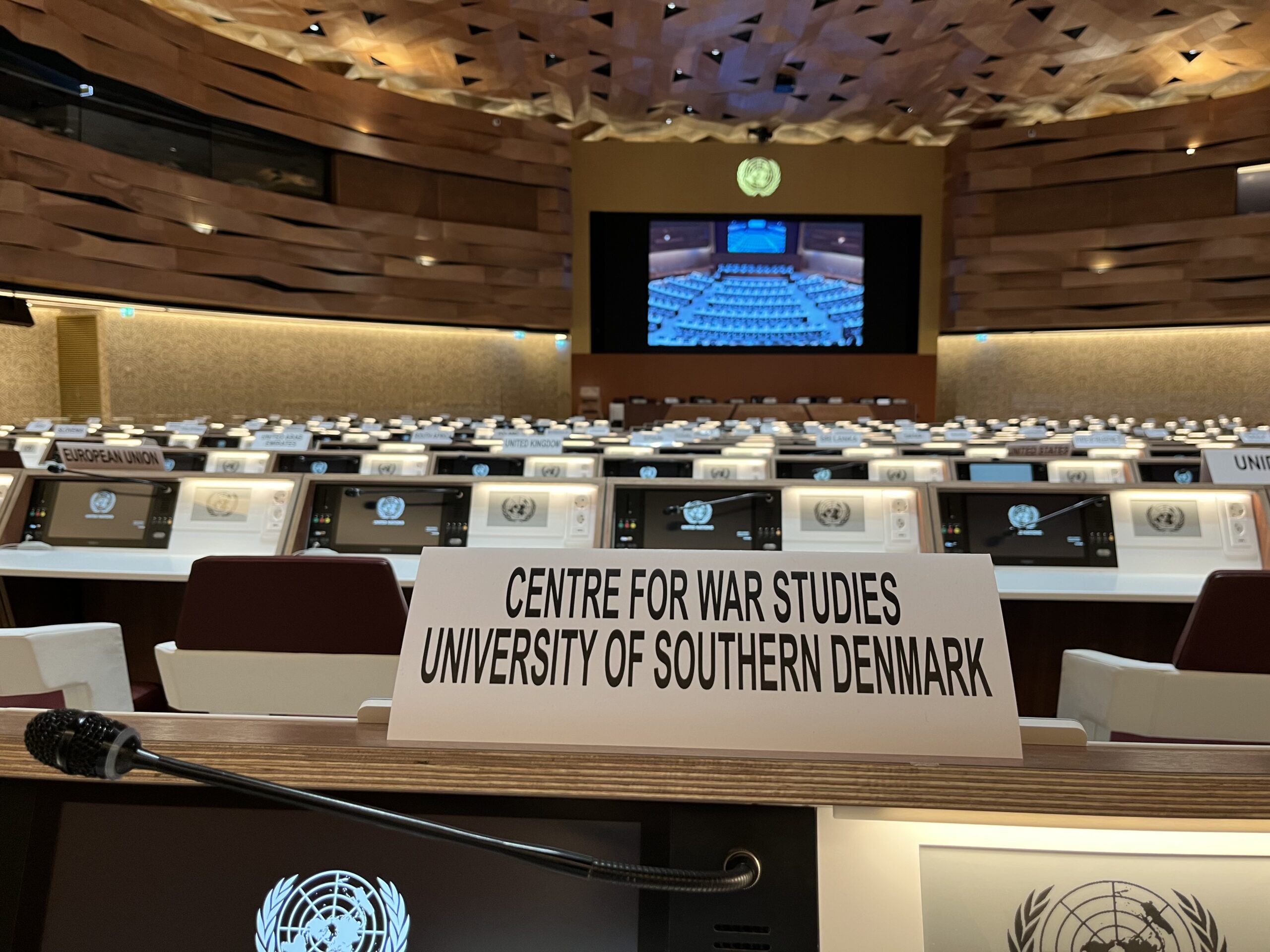
On 4-5 February 2026, the third edition of the Responsible AI in the Military Domain (REAIM) Summit was held in A Coruña, Spain. The event was organised by the Spanish Ministries of Foreign Affairs and Defence, together with the A Coruña City Council. The third edition followed upon two summits held in 2023 and in 2024 in the Netherlands and the Republic of Korea, respectively.
The REAIM Summit has become a key multi-stakeholder platform for actors including states, international institutions, academia, the private sector, and civil society to discuss AI governance in the military domain. One of the key elements of discussion within the REAIM framework has been the role of the human in the development and use of AI, whether framed in terms of “human oversight of the use of AI systems” (2023 REAIM Call to Action) or “appropriate human involvement” (2024 Blueprint for Action and 2026 Pathways to Action).
The role of the human has become a recognised governance principle in debates on AI in the military domain, both at the REAIM summits and beyond. However, there is often a lack of operationalisation of this principle in practice.
The European Research Council-funded AutoPractices project, which is based upon the AutoNorms project, contributes to these debates by highlighting concrete sets of practices that can sustain and strengthen the exercise of human agency at all stages of the continuous AI lifecycle. The practices are performed by various humans across the lifecycle of AI systems including policymakers, developers, engineers, operators, and military personnel.
The capstone output of the AutoPractices project is a toolkit encompassing these best practices, identified via a co-creative process involving 49 stakeholders from across disciplines and regions of the world. The toolkit was published in January 2026 by the Center for War Studies at the University of Southern Denmark, in collaboration with the Stockholm International Peace Research Institute (SIPRI).
AutoPractices at the REAIM Summit 2026
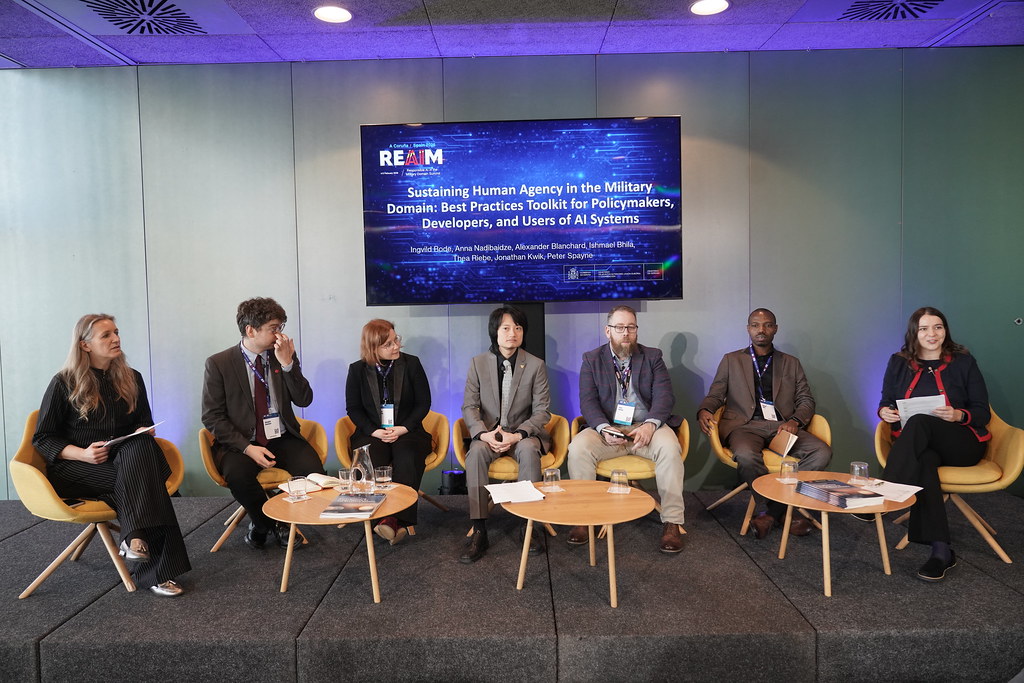
The AutoPractices team presented the best practices toolkit at the breakout session entitled “Sustaining Human Agency in the Military Domain: Best Practices Toolkit for Policymakers, Developers, and Users of AI Systems” on 4 February at REAIM 2026.
During the breakout session, Prof Ingvild Bode and Dr Anna Nadibaidze presented the findings of the AutoPractices project, followed by comments from AutoPractices team member Dr Alexander Blanchard (Senior Researcher at SIPRI), as well four stakeholders who participated in the project: Dr Jonathan Kwik (Postdoctoral Researcher at the TMC Asser Institute); Peter Spayne (AI consultant, retired warrant officer from the UK Royal Navy); Dr Ishmael Bhila (Lecturer at Paderborn University); and Dr Thea Riebe (Researcher at Technical University Darmstadt). Each stakeholder reflected upon the project’s findings and its significance in the global debates on governing military applications of AI.
Five takeaways from the session
1. The value of a bottom-up and interdisciplinary approach
The participants highlighted the value of the project’s bottom-up approach, which allowed the project to collect a wide range of perspectives across disciplines and continents, as well as to enable a balance between states’ security and humanitarian concerns. Alexander Blanchard, a long-time observer of the governance debates on autonomous weapon systems (AWS) and AI in the military domain, noted that the AI lifecycle approach adopted by the toolkit highlights that the exercise of human agency relies on the practices of humans at the various stages of the lifecycle. The toolkit supports users to understand what has been done prior to the stage(s) relevant to their work, ensuring transparency throughout the whole process from pre- to post-use.
The toolkit thus supports the establishment of clearer roles for humans across the AI lifecycle, for example, policymakers at the early stages in specifying the need for clear decision-making and setting of boundaries on where AI systems should or should not be used. In Blanchard’s evaluation, the bottom-up approach highlights important considerations in governance debates, for example states’ engagement with the private sector, as the toolkit “begins to sketch ways for policymakers to engage with industry”.
2. The structure of human-AI interaction across the AI lifecycle
Thea Riebe, an expert in human-computer interaction, presented her key technical takeaways from the project. She highlighted the toolkit’s contribution to the operationalisation of precautionary principles, as well as its efforts in allocating practices and responsibilities to different stakeholders to clarify “what kind of exchange needs to happen and with whom”. As Riebe noted, communication and feedback loops across the lifecycle strengthen the exchanges between different groups of stakeholders.
Riebe emphasised that the toolkit provides a clear structure for these exchanges. For example, human operators should give feedback on human-AI interaction at the stage of design, including any AI system’s interface design. Creating such feedback loops with interface designers and developers is key to strengthen testing, auditing, and risk assessment procedures across the AI lifecycle.
Riebe concluded by stating that given that “these are not neutral technological developments”, it is crucial to think about core norms and values in the design of AI systems.
3. The importance of early lifecycle stages
Contributing with a legal perspective, Jonathan Kwik argued that the toolkit can serve as a clear set of guidelines for states and actors in determining and defining precise objectives to the development and deployment of AI systems in the military context. This increases the mitigation of variability and different understandings of how humans should operate AI systems. By eliminating a wide range of variables, the toolkit supports legal considerations and obligations to ensure a responsible use of AI.
Defining shared objectives supports strategic efforts to address ‘black box’ challenges within AI systems and to conduct comprehensive tests in different sets of environments. This ensures the predictability of outcomes as much as possible. As Kwik highlighted, the toolkit’s focus on testing interfaces and decision traceability means that unpredictable edge cases are better ensured and taken account for.
Kwik further drew attention to the operational pressure that users face when employing AI-based decision-support systems, creating a so-called “concept drift”. He defined this drift to be a result of operators’ need to think creatively when using systems for targeting, even when this was not the systems’ main purpose of use. The toolkit addresses this issue by engaging states and actors across the AI lifecycle to do the thinking before the implementation stages of the lifecycle, and by also clearly defining the roles of various humans across the lifecycle.
4. The significance of education and training
Elaborating on the toolkit’s contribution to the education and training of military personnel, Peter Spayne, who has many years of experience in the UK Royal Navy, discussed different views on the infrastructure related to AI systems, as well as different assumptions on how these systems work. He stated that users may know AI, but without much detail, reflecting the need for necessary and adaptable training and education before deployment. Basic training of military personnel where they engage with such systems needs to be adaptable in order to secure sufficient engagement to further mitigate incorrect or unintended use.
Spayne further highlighted how systematic institutional evaluation can lead to significant shifts in institutional culture. In this context, AI is not merely introduced as a technical tool, but functions as an enabler of broader structural change within military systems and infrastructures.
As these infrastructures and decision-making environments change, existing training practices are no longer sufficient. Spayne therefore stressed the need for users to adapt their training in order to establish and understand a new baseline of competence for military personnel engaging with AI-based systems.
5. Different perspectives on the operationalisation of best practices
The toolkit encourages stakeholders to develop and adopt concrete strategies tailored to their available resources as well as to strategic and operational contexts. Reflecting on this take-away from the AutoPractices project, Ishmael Bhila offered key insights into how these practices may be operationalised across different environments.
Drawing on perspectives from the Global South, Bhila emphasised that military AI systems will be used differently depending on contextual and resource-based conditions. He therefore stressed the importance of training and contextual assessment at an early stage to determine whether a given system is suitable for the environment in which it is intended to operate.
His main takeaways from the toolkit cover three interrelated aspects of governing military AI. First, aligning with Blanchard, he highlighted the value of the lifecycle approach, particularly in supporting pre-development measures at the political level. Clear policy decisions at this stage are essential to determine what counts as acceptable uses of AI-based systems before development and deployment.
Second, he pointed to the toolkit’s contribution in terms of increasing accountability and responsibility measures during system development, emphasising the importance of explainability and predictability. By defining boundaries that determine how and when systems should be used (and when they should not), the toolkit supports more responsible system design and operational use.
Third, Bhila drew attention to procurement practices, raising questions about where and how military AI systems are acquired, including considerations related to existing frameworks such as the Arms Trade Treaty.
Finally, he emphasised the importance of safeguarding human agency in the use phases of AI systems. In this regard, the toolkit offers practices to prevent humans from being reduced to a merely nominal role, instead reinforcing meaningful human control.
Concluding remarks on the toolkit’s practices
The contributions delivered by the stakeholders during the panel discussion at the third REAIM Summit in Spain offered valuable insights into the practices outlined in the AutoPractices toolkit and its applicability for policymakers, developers, and users of military AI systems. The stakeholders highlighted the toolkit’s usability as a practical governance instrument across different stages of the AI lifecycle.
The panel discussion underscored the toolkit’s value in supporting early political decision-making, enhancing accountability and transparency in system development, guiding education and training practices, and enabling context-sensitive implementation across diverse operational environments. The reflections demonstrated how the toolkit translates the governance principle of the role of the human in the use of force into specific activities, thereby sustaining the exercise of human agency in the military domain.
About the author
Alexander Hedegaard is a student assistant at the Center for War Studies and the Department of Political Science at the University of Southern Denmark.